What Was It?
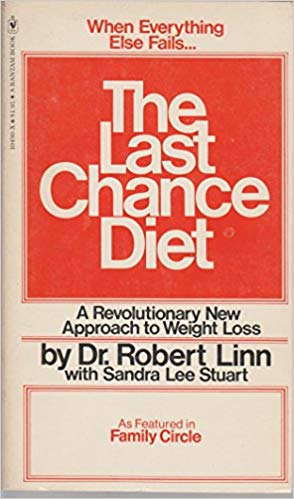
“The Last Chance Diet” believed that if people only drank liquid protein, they would lose the weight for good and never need to go on another diet again. This diet became popular in 1976, after its founder, Dr. Robert Linn, published a book on it that sold over 2 million copies in about two years. The book hailed a liquid protein called Prolinn (which Linn created and sold) as the solution for weight loss.
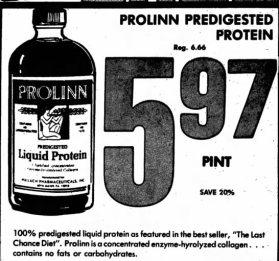
So what is Prolinn? Despite the positive sounding name, it was nothing that could remotely be considered tasty. The dietary concoction was made up of cowhide and tendon that was chemically predigested so the protein and amino acids were partially separated already. This is all people would drink with water or other low calorie drinks along with other vitamin and mineral supplements.
Once people lost the weight on the liquid diet, they could slowly reintroduce solid food, under a doctor’s supervision. At first, the diet was seen as the solution to obesity and weight loss. Celebrities and the wealthy rushed to it, more and more similar products went on the market, and it seemed like everyone was trying it. The FDA intervened in 1977, after news that several people had died because of the diet. With this controversy, the diet faded in popularity as quickly as it started.
The Science Behind It
The body can withstand the liquid only diet because of how the supplements act within the body. When a person simply stops eating, the body survives by using not only fat, but also lean tissue, which make up our muscles and organs. Ingesting liquid protein stops the body from needing to use the lean tissue and it focuses on the fat instead. The body can focus on burning fat as energy because there is no glucose left in the body. The first studies learning that the body did not need to run on glucose were pioneered in 1967.
The Controversy
After Dr. Linn released his book, the diet skyrocketed in popularity. The diet made about $40 million, and it was reported that Prolinn (and soon after other similar supplements) were flying off the shelves.
The problem is patients should be under strict physician observation when on the diet. This was especially important for reintroducing food, because it is so easy for someone to go back to old eating habits.
Also, this diet was intended for people who were obese and needed to lose a lot of weight. People with certain health conditions should not be on the diet at all. Basically what should have been a diet for a niche population under physician care became a popular diet done at home by millions of people.
Due to the diet, several people died and the FDA ended up reviewing the supplement. There was also controversy around Dr. Linn because in his book, he only names Prolinn as the supplement to use, because he created and owned the supplement. He eventually donated the name of the supplement to a foundation that he sat on the board of. These issues lead to a quick decline in the diet’s popularity.It’s pretty obvious why this fad diet became just that: a fad. When people stop eating completely in order to lose weight, something is very wrong. Even today, people promote using supplements over real meals and it is not a sustainable form of weight loss.
You may have had some bells go off when reading about the diet being able to burn fat better with no glucose in available. This is also the basis of the ketogenetic diet. From the research done in 1967, medical professionals learned that being in a state of ketosis was not as dangerous as originally believed. While the keto diet has a long history and is very different from what Dr. Linn had developed, it is interesting to see how early scientific research influenced diet beliefs at the time.
 Fad Diet Fails