The Air Diet

While intermittent fasting has become a popular diet trend over the past few years, one fad diet in 2010 by the French magazine Grazia told people to just stop eating entirely. The magazine suggested that people should prepare meals, then just smell them and the brain would be tricked into thinking they actually ate.

Background

Overall, there wasn’t much written about this particular fad diet. That’s the issue with fads they come and go quickly. From everything I could find, the diet became popularized by a Dolce & Gabbana campaign where celebrities would place food up to their mouths, but not actually eat it. The only thing people could consume was water and then a water and salt “soup.”

The disturbing part of this fad diet is that there’s no time frame on it. Intermittent fasting has time limits, as do most other diets that tell people to consume very limited amounts of calories. The body cannot survive long on little to no food, so having a specific time frame is needed.

I couldn’t find much more on this particular fad, but there is more history behind the idea of people being able to survive on very little to no food at all.

History

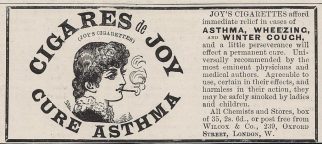
During my research, I found out that the air diet was based off a much older practice called breatharianism. This is the belief that a person can live off of “life air” through spiritual enlightenment and meditation. Instances of this practice have been documented for centuries in and comes from Hinduism. There are a number of cases of people in India claiming to have survived for long periods of time, and some have even gone under observation to prove that they could live without any traditional substance.  

The popularity of breatharianism has faded in and out over the years. From time to time, the media picks up a story about an individual surviving without food or water, and they run with the piece. While this practice comes from Hinduism, people in Western cultures have taken to the concept.

An Australian named Jasmuheen, formerly Ellen Greve, is credited with starting the most recent Breatharian movement. She believes that a person should convert to Breatharianism gradually: first by becoming vegetarian, then a vegan, move to raw foods, then eat just fruits, then only liquids, and finally, no food or liquid at all.  Jasmuheen herself says that she has lived for years with only eating a mouthful of food every once in a while for years. Some of her followers though have died from this practice.
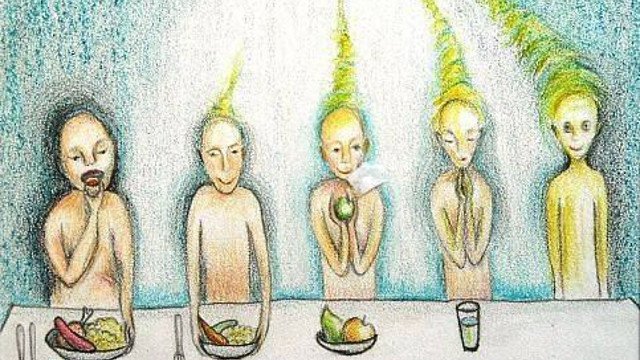
Breathariannonsense

The Science Behind It

There’s no scientific reason to stop eating or drinking indefinitely. All experts tell people that they need to eat food and drink water. Fasting for a limited amount of time for health or spiritual reasons is widely practiced and okay for people to do. This is because it is for a limited amount of time and people go back to eating regularly.

Conclusion

With the limited information out there about “the air diet,” I can’t figure out how the age-old religious practice of breatharianism turned into a Dolce & Gabbana campaign that inspired a magazine to decide that only smelling food was the “it” diet.

It’s important to remember that eating regularly is necessary for a healthy life. Practicing temporary fasting for a set amount of time can be beneficial, but it should be just that – temporary.

Images from: 

https://www.womenfitness.net/news-flash/smelling-food-makes-fat/

https://respectfulinsolence.com/2017/06/19/while-oracs-away-the-breatharians-will-play/
The Tapeworm Diet

I love Halloween. Since early childhood it has been my favorite holiday. While I’m not fan of haunted houses – I do love a good, creepy story that’ll keep me up at night. To celebrate the holiday, I decided to try and find a fitting fad diet, and as it turns out, I didn’t have to look hard. The tapeworm diet is everything you want in a diet story, it’s gross, it’s from a time in history when science was evolving and it includes controversy.  

Background

Before talking about the diet itself, let’s discuss the horrifying times that are the Victorian Era.  While advancements to science and medicine were happening, there were still few regulations, an unstructured medical system and beauty standards that people would die trying to achieve.  In fact, during this time, it was considered attractive to look like you had consumption (tuberculosis) – pale skin, rosy cheeks, crimson lips and a frail, thin figure.  

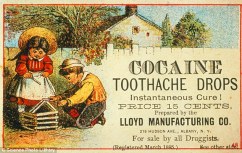
This was also the time when medicine was new, so drugs like cocaine and heroin were prescribed by doctors and surgical procedures were still in their infancy. So when it come to medicine, people relied on a unique mix of medicine, home remedies and then the fake medicine sold by con men.

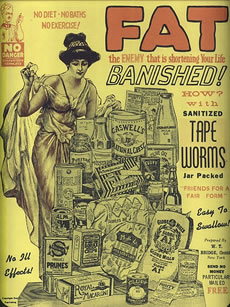
VE Advertisement     VE image 2

What was the diet?

For someone on the diet, they would take pills that contained a tapeworm egg. The egg would then hatch in the person’s intestines and beginning eating the food before the person could ingest it, saving them from the calories. This allowed a person to eat however much they wanted while still losing weight. While this sounds great in theory, it didn’t really work that way. There are also different accounts of how people would remove the tapeworms once they reached their desired weight, but none of them were pleasant and could result in death.

The side effects to tapeworms were also disgusting, painful and potentially deadly. The biggest concern is that the tapeworm would attach outside of the digestive tract, causing organ damage and other health issues. Side effects of this include nausea, stomach pain, fever and diarrhea.

Even if the tapeworm did properly attach itself, side effects are malnutrition, weakness, infection and neurological issues. The ironic part is, for all the suffering and risk, the diet most likely would not even help people lose weight. In fact, weight gain is a potential side effect because the tapeworm makes people so hungry. In 2014, a doctor decided to give himself a tapeworm and he noted that he craved carbohydrates and gained weight.

The Controversy

What’s interesting about this diet is the debate on if it was even real or not. While there are a lot of stories about and what appears to be an advertisement for the pill, people doubt if this diet was actually used by Victorians.

There are a few layers to this controversy. The first issue being that there is no way for anyone to verify now if the pills sold in the Victorian times actually contained live tapeworm eggs or not. As mentioned before, this was a time when advertising increased in popularity and con men were willing to sell anything to make money. For all we know, people believed they were taking tapeworm pills, but they could have easily been fake.

There is also discussion around the advertisement for the pills being fake as well. While the image may look convincing, no one has been able to identify its original source and some of the wording matches exactly to a 1920 advertisement for another type of diet pill. It’s also argued that all the brand name food mentioned in the ad would not have been allowed, because those company’s would not have wanted to be associated with this product.

VE image 3

There is also a lack of documentation from any regulatory source from this time. While this not unsurprising, considering how long ago it was, and the fact that the groundwork for what is now the FDA was founded in 1906 with the Pure Food and Drugs Act. Still, over the decades, rumors in papers would float around about the tapeworm diet pill, but nothing concrete has been evaluated by the FDA.    

In Today’s Culture

Despite this controversy around if the diet was real back then or not, it has found a place in modern times. As mentioned before, in 2014 a doctor gave himself a tapeworm to see what would happen. A year earlier, a woman in Iowa had bought tapeworm pills online to lose weight and this resulted in an official warning the state’s public health department about the dangers of trying this diet.

In 2015, Khloe Kardashian joked about ingesting a tapeworm to lose weight and this resulted in some media coverage. There are also some sketchy parts of the internet that claim to sell tapeworm pills for people who want to lose weight, but these could pills could easily be fake as well.

The legacy of the tapeworm diet appears to live on as people are willing to risk their lives in order to lose weight. The strangeness of the diet along with the controversy surrounding it will continue to fascinate people and fuel online chatter around the diet.

For a fad diet, this one is especially dangerous and not worth the risk of trying.  It does make for a fun Halloween story though and makes you especially grateful to not live in an era where cocaine was given to babies and people thought dying of tuberculosis  was a good look.

The Last Chance Diet

last chance

What Was It?
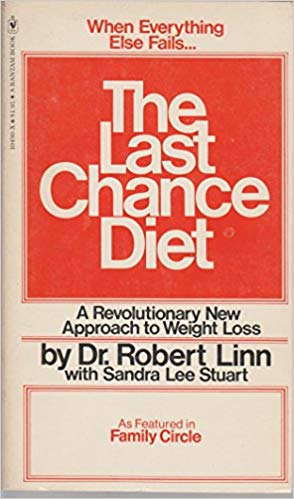
“The Last Chance Diet” believed that if people only drank liquid protein, they would lose the weight for good and never need to go on another diet again. This diet became popular in 1976, after its founder, Dr. Robert Linn, published a book on it that sold over 2 million copies in about two years. The book hailed a liquid protein called Prolinn (which Linn created and sold) as the solution for weight loss.

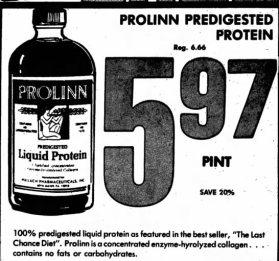
So what is Prolinn? Despite the positive sounding name, it was nothing that could remotely be considered tasty. The dietary concoction was made up of cowhide and tendon that was chemically predigested so the protein and amino acids were partially separated already. This is all people would drink with water or other low calorie drinks along with other vitamin and mineral supplements.

prolinn-diet

Once people lost the weight on the liquid diet, they could slowly reintroduce solid food, under a doctor’s supervision. At first, the diet was seen as the solution to obesity and weight loss. Celebrities and the wealthy rushed to it, more and more similar products went on the market, and it seemed like everyone was trying it. The FDA intervened in 1977, after news that several people had died because of the diet. With this controversy, the diet faded in popularity as quickly as it started.

The Science Behind It
The body can withstand the liquid only diet because of how the supplements act within the body. When a person simply stops eating, the body survives by using not only fat, but also lean tissue, which make up our muscles and organs. Ingesting liquid protein stops the body from needing to use the lean tissue and it focuses on the fat instead. The body can focus on burning fat as energy because there is no glucose left in the body. The first studies learning that the body did not need to run on glucose were pioneered in 1967.

The Controversy
After Dr. Linn released his book, the diet skyrocketed in popularity. The diet made about $40 million, and it was reported that Prolinn (and soon after other similar supplements) were flying off the shelves.

The problem is patients should be under strict physician observation when on the diet. This was especially important for reintroducing food, because it is so easy for someone to go back to old eating habits.

Also, this diet was intended for people who were obese and needed to lose a lot of weight. People with certain health conditions should not be on the diet at all. Basically what should have been a diet for a niche population under physician care became a popular diet done at home by millions of people.

Due to the diet, several people died and the FDA ended up reviewing the supplement. There was also controversy around Dr. Linn because in his book, he only names Prolinn as the supplement to use, because he created and owned the supplement. He eventually donated the name of the supplement to a foundation that he sat on the board of. These issues lead to a quick decline in the diet’s popularity.It’s pretty obvious why this fad diet became just that: a fad. When people stop eating completely in order to lose weight, something is very wrong. Even today, people promote using supplements over real meals and it is not a sustainable form of weight loss.

You may have had some bells go off when reading about the diet being able to burn fat better with no glucose in available. This is also the basis of the ketogenetic diet. From the research done in 1967, medical professionals learned that being in a state of ketosis was not as dangerous as originally believed. While the keto diet has a long history and is very different from what Dr. Linn had developed, it is interesting to see how early scientific research influenced diet beliefs at the time.