
While intermittent fasting has become a popular diet trend over the past few years, one fad diet in 2010 by the French magazine Grazia told people to just stop eating entirely. The magazine suggested that people should prepare meals, then just smell them and the brain would be tricked into thinking they actually ate.
Background
Overall, there wasn’t much written about this particular fad diet. That’s the issue with fads – they come and go quickly. From everything I could find, the diet became popularized by a Dolce & Gabbana campaign where celebrities would place food up to their mouths, but not actually eat it. The only thing people could consume was water and then a water and salt “soup.”
The disturbing part of this fad diet is that there’s no time frame on it. Intermittent fasting has time limits, as do most other diets that tell people to consume very limited amounts of calories. The body cannot survive long on little to no food, so having a specific time frame is needed.
I couldn’t find much more on this particular fad, but there is more history behind the idea of people being able to survive on very little to no food at all.
History
During my research, I found out that the air diet was based off a much older practice called breatharianism. This is the belief that a person can live off of “life air” through spiritual enlightenment and meditation. Instances of this practice have been documented for centuries in and comes from Hinduism. There are a number of cases of people in India claiming to have survived for long periods of time, and some have even gone under observation to prove that they could live without any traditional substance.
The popularity of breatharianism has faded in and out over the years. From time to time, the media picks up a story about an individual surviving without food or water, and they run with the piece. While this practice comes from Hinduism, people in Western cultures have taken to the concept.
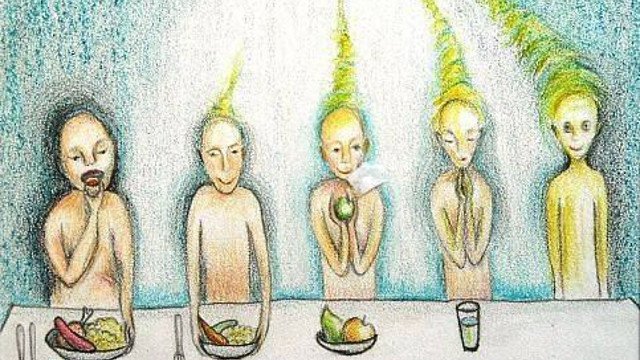
An Australian named Jasmuheen, formerly Ellen Greve, is credited with starting the most recent Breatharian movement. She believes that a person should convert to Breatharianism gradually: first by becoming vegetarian, then a vegan, move to raw foods, then eat just fruits, then only liquids, and finally, no food or liquid at all. Jasmuheen herself says that she has lived for years with only eating a mouthful of food every once in a while for years. Some of her followers though have died from this practice.
The Science Behind It
There’s no scientific reason to stop eating or drinking indefinitely. All experts tell people that they need to eat food and drink water. Fasting for a limited amount of time for health or spiritual reasons is widely practiced and okay for people to do. This is because it is for a limited amount of time and people go back to eating regularly.
Conclusion
With the limited information out there about “the air diet,” I can’t figure out how the age-old religious practice of breatharianism turned into a Dolce & Gabbana campaign that inspired a magazine to decide that only smelling food was the “it” diet.
It’s important to remember that eating regularly is necessary for a healthy life. Practicing temporary fasting for a set amount of time can be beneficial, but it should be just that – temporary.
Images from:
https://www.womenfitness.net/news-flash/smelling-food-makes-fat/
https://respectfulinsolence.com/2017/06/19/while-oracs-away-the-breatharians-will-play/



 Fad Diet Fails